

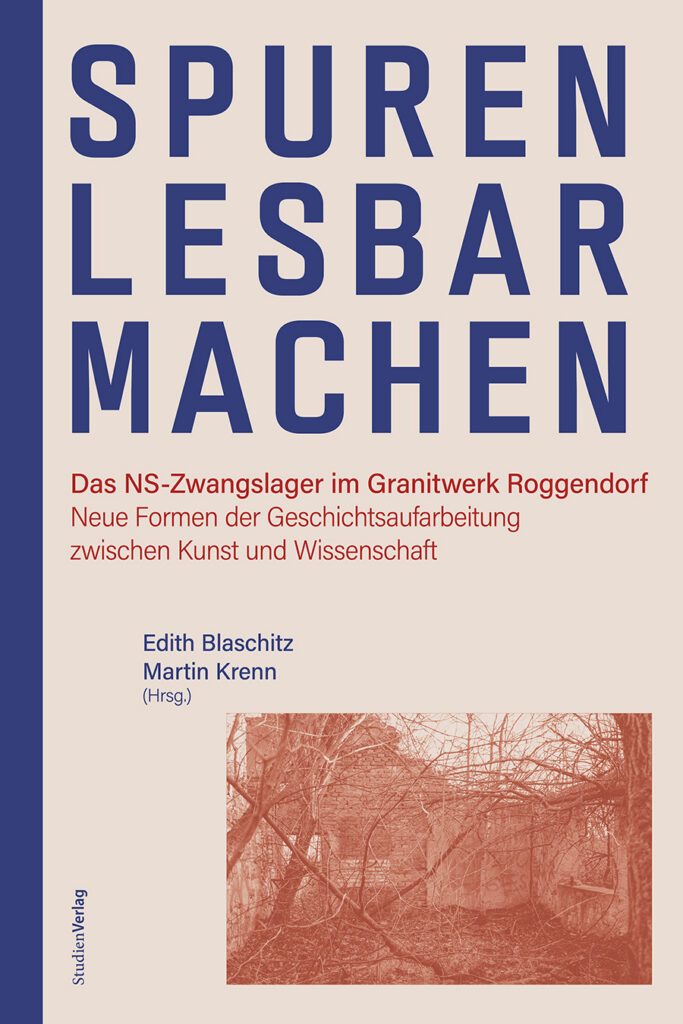
On February 17, 2026, the book „Spuren lesbar machen“. Das NS-Zwangslager im Granitwerk Roggendorf. Neue Formen der Geschichtsaufarbeitung [Making Traces Legible: The Nazi Forced-Labour Camp at the Roggendorf Granite Works and Quarry: New Forms of Coming to Terms with the Past] (StudienVerlag, 2026; translation mine) was presented at the Vienna Wiesenthal Institute for Holocaust Studies.
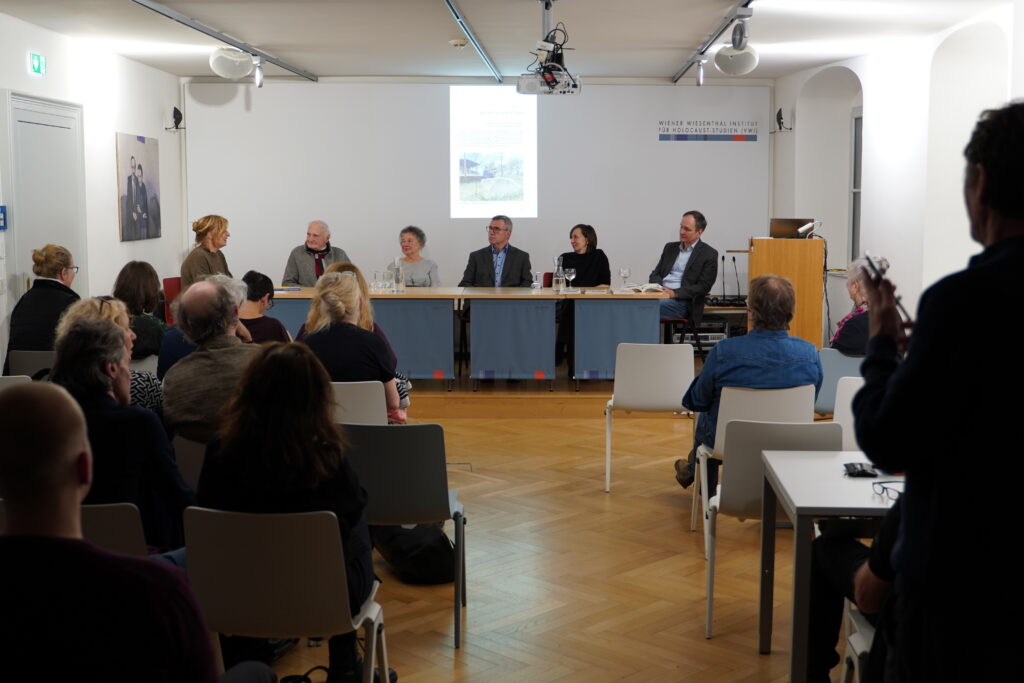
The event began with the editors, historian Edith Blaschitz and the artist and art scholar Martin Krenn introducing the publication and the research project underpinning it, which examines the forced-labour site at the Roggendorf granite works near Pulkau. Between 1941 and 1945, prisoners of war, “Eastern workers,” and Hungarian-Jewish families were used for forced labor in the quarry. The site is representative of countless locations of Nazi violence that were suppressed from public memory after 1945 or only marginally addressed.
Today, there are hardly any visible traces of Nazi crimes left at the quarry site. For a long time, the area was overshadowed by other layers of memory—from its history as a former industrial site to memories of swimming in the idyllic pond. An artistic project by Maria Theresia Litschauer, which drew attention to the former forced labor camp in the early 2000s, largely failed to resonate locally.
Between 2021 and 2023, an interdisciplinary team of historians, artists, and media designers carried out a project to visualize and critically reexamine the history of the site1]. The renewed examination was initiated by the renowned historian Heidemarie Uhl; it was one of her last projects before her untimely death in August 2023. A proposal written by Edith Blaschitz and Heidemarie Uhl was made possible by the State of Lower Austria and the Federal Ministry of Arts and Culture (support from Georg Vogt, submitted by the OpenGlam association).
The edited volume presented on this occasion brings together, among other things, contributions on the place of forced labour in contemporary memory culture, on art as a mediating practice, and on the project’s methodological design, which integratively links historical research, artistic practice, participatory approaches, and digital technologies. Alongside a reconstructed account of the Nazi forced-labour camp, the book also includes memories and reflections by descendants—both from the families of the former works operators and members of the local community, and from descendants of Jewish forced labourers in Israel and Australia. The result is a multi-perspectival picture that brings into view the significance of an ostensibly peripheral and forgotten site as a node of transnational remembrance.
Following the presentation, the host, Eva Kovacs, deputy director of the Wiesenthal Institute, discussed the volume with the editors, the mayor of Pulkau, Leo Ramharter, and the regional researchers Herta and Herbert Puschnik. The discussion initially centred on local perspectives in Pulkau: although the community was confronted with the history of this site of violence by a research team coming from outside, many residents engaged actively in the project—as participants in the history workshop led by historian Wolfgang Gasser, through the municipality’s organisation of events and mailings, and with support from the local association Bildung hat Wert (“Education Has Value”). The project events, including the presentation of research findings, attracted considerable interest. As the discussants from Pulkau emphasised, a particularly lasting impression was made by the visit of Mira Knei-Paz, who was born near Pulkau as the child of a Jewish forced labourer and travelled from Israel with her granddaughter, speaking about her engagement with the place. Herta and Herbert Puschnik also described how, after the project concluded, they worked with the municipality to initiate a memorial stone for Jewish women from Pulkau who were murdered, so that their names and fates would remain visibly inscribed in public space.
In the ensuing discussion, in which other members of the project team and descendants participated, personal experiences from the research and participation process were reflected upon. The challenge of dealing with Nazi violence in one’s immediate environment or in one’s own family history was also discussed. Wolfgang Gasser reported on the involvement of a school class from the Neue Mittelschule Pulkau and on how to deal with critical reactions from the population. The artist Rosa Andraschek emphasized the examination of “incomplete memory,” which had a significant influence on her artistic contribution. Martin Krenn emphasized that his artistic contribution was not intended to be a didactic tour of the site, but rather his own examination of the place and its stories.
There was broad agreement, finally, that engagement with the past will not end with this project. As Edith Blaschitz notes, Pulkau commemorates Anna Goldsteiner, a resistance fighter who was executed in 1944, but so far only with a small plaque in a less visible location. This raises the question of how the memory of this courageous woman can be anchored more prominently and sustainably in the local culture of remembrance in the future.
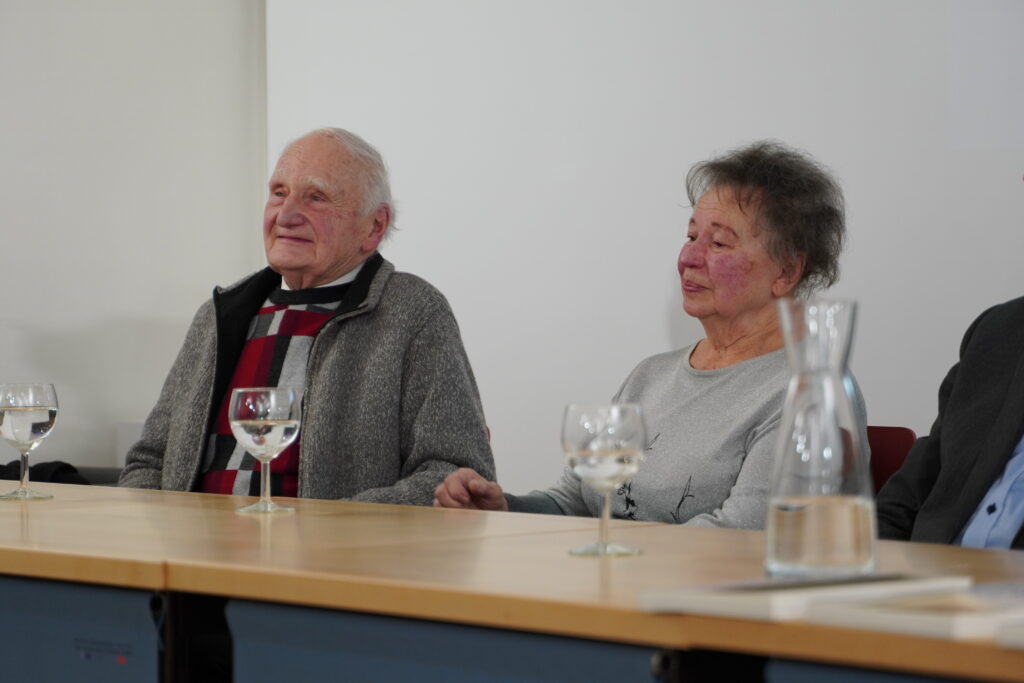
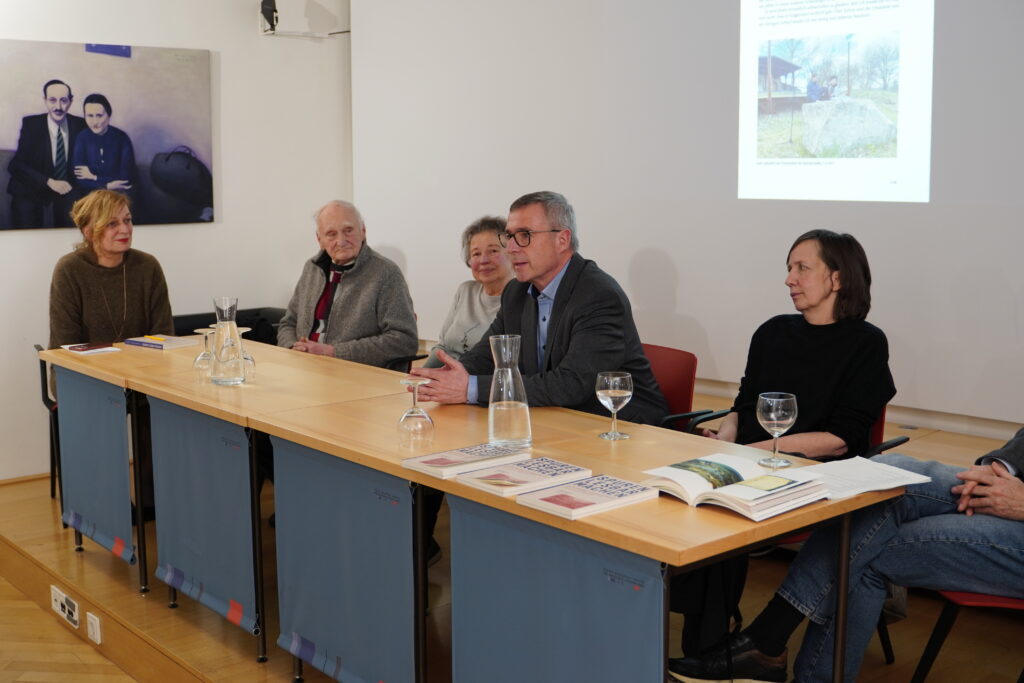
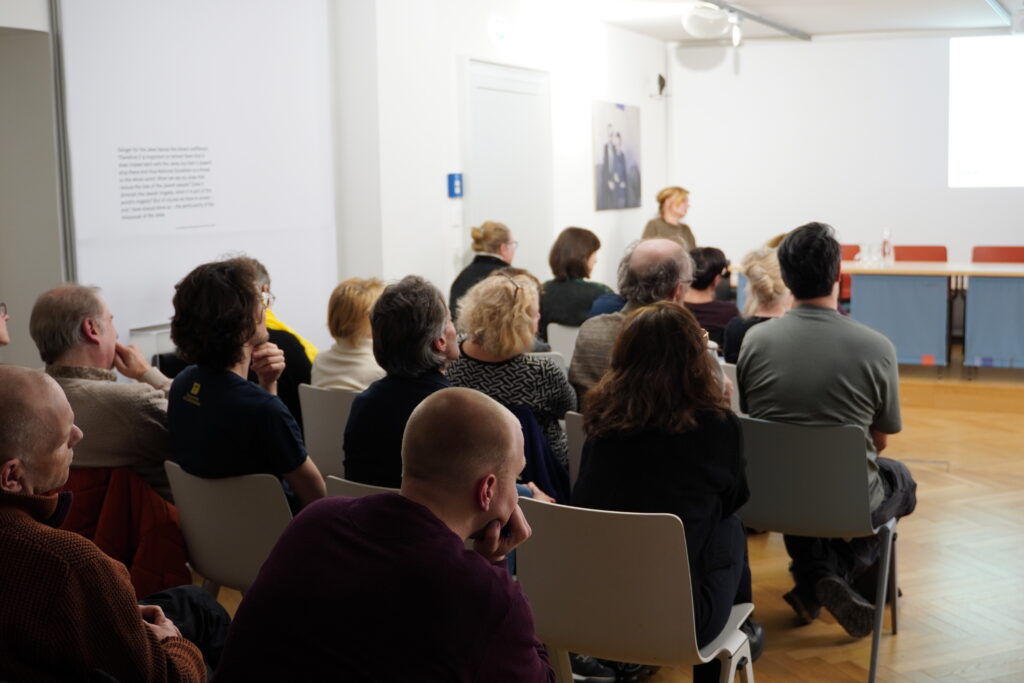
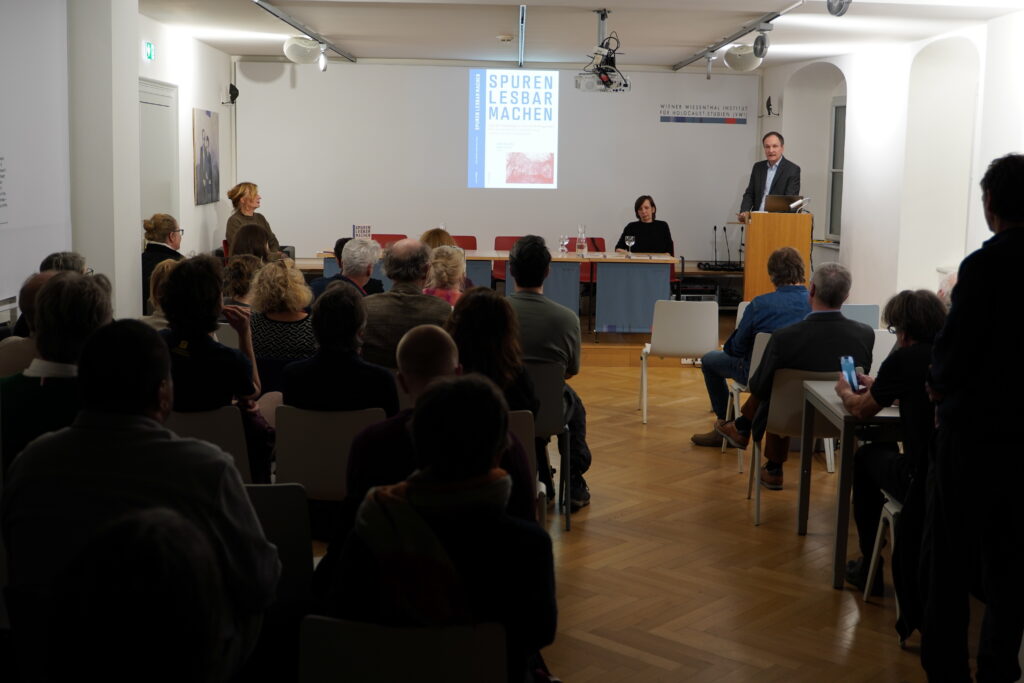
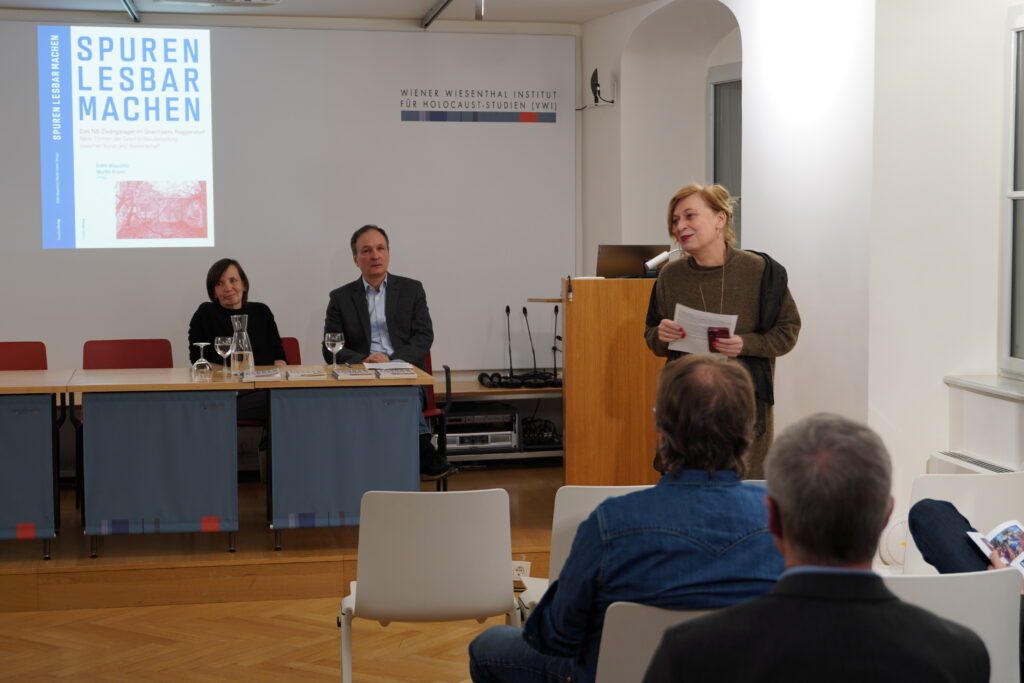
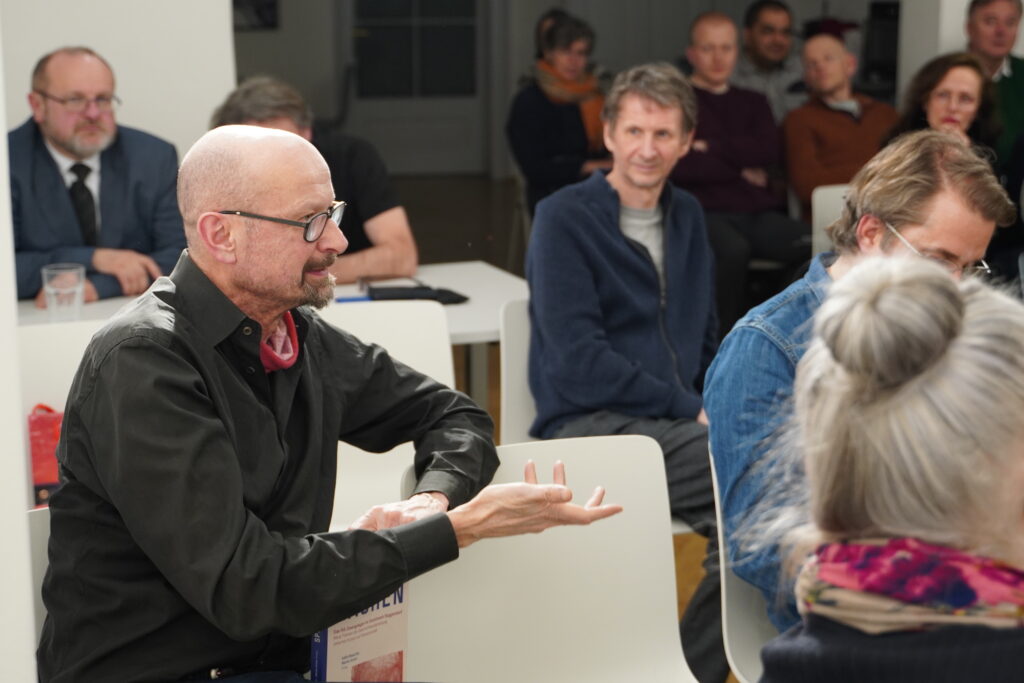
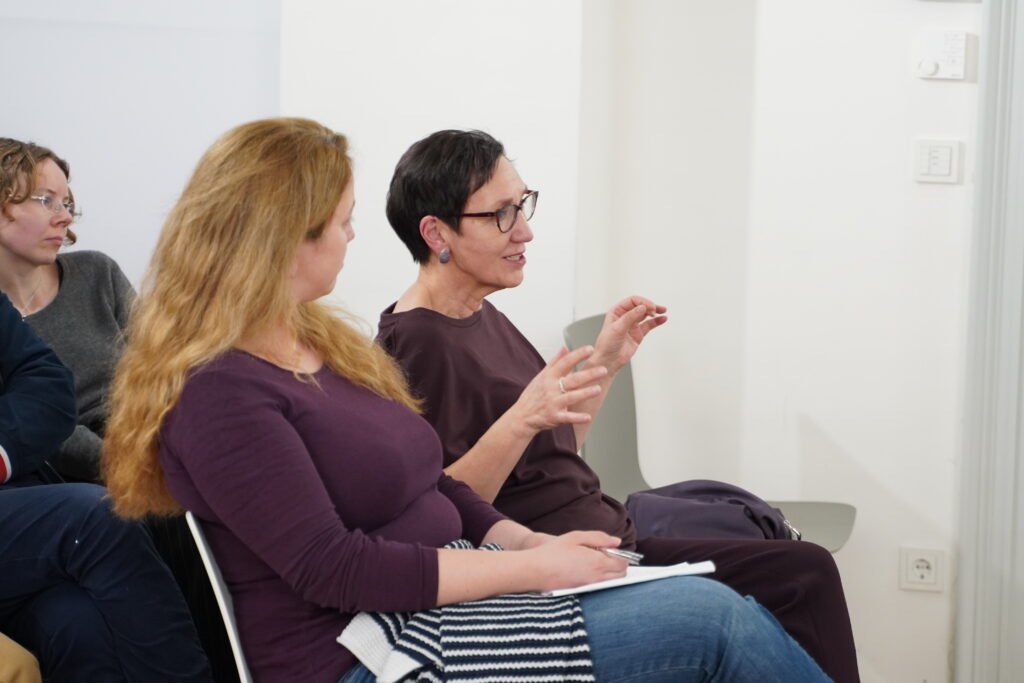
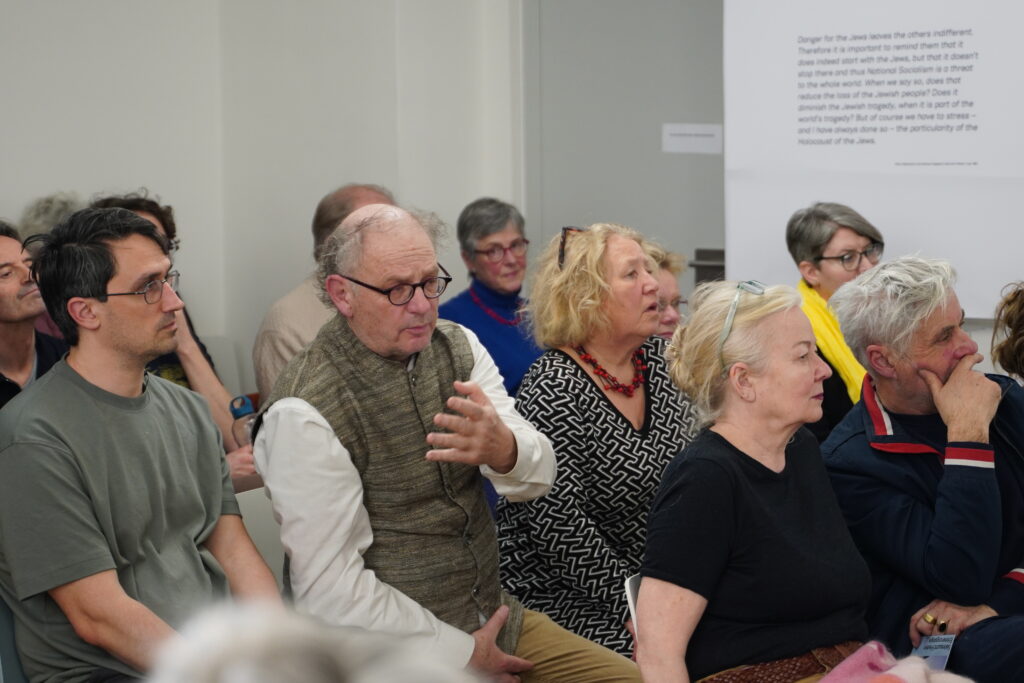
Foto Credits (c) VWI
Info:
Edith Blaschitz, Martin Krenn (eds.): “Making Traces Legible. The Nazi Forced Labor Camp at the Roggendorf Granite Quarry. New Forms of Coming to Terms with History.” StudienVerlag 2026
With contributions by Aleida Assmann, Heidemarie Uhl, Edith Blaschitz, Martin Krenn, Georg Vogt, Wolfgang Gasser, Claudia Theune, Ferdinand Melichar, Mira Knei-Paz, Wolfgang Liko, Mirjam Rajner, Agnes Bankier, Lukas Jäger, Herta and Herbert Puschnik, Ludwig Wurst, Martina Genetti, Rosa Andraschek, and Cornelia Offergeld. The book also contains artistic inserts and numerous photos.
The publication of this book was sponsored by:
HBK Hochschule für Bildende Künste Braunschweig
first – Forschungsnetzwerk Interdisziplinäre Regionalstudien
Land Niederösterreich – Abteilung Wissenschaft – Forschung
Nationalfonds der Republik Österreich für Opfer des Nationalsozialismus
Research Project „Spuren lesbar machen“
Artistic project by Rosa Andraschek: Memory Spaces
Artistic project by Martin Krenn: Der Steinbruch, das Lager und die Ortschaften
- Making traces legible. Laboratory for art, participation, and digital spaces; duration: 11/2021–4/2023; Concept and direction: Edith Blaschitz (University for Continuing Education Krems), Heidemarie Uhl (Austrian Academy of Sciences); artistic implementation: Rosa Andraschek, Martin Krenn; research partners: Georg Vogt, Clemens Baumann, Alexander Schlager (St. Pölten University of Applied Sciences); Wolfgang Gasser (Institute for Jewish History in Austria); Application submission and project management: Sylvia Petrovic-Maier (OpenGLAM); Organizational support: Daniela Wagner (University for Continuing Education Krems); Project partners: Municipality of Pulkau; Cultural association Bildung hat Wert, Pulkau. Cooperation partners: Claudia Theune (Institute for Prehistory and Historical Archaeology, University of Vienna); Paul Mahringer (Federal Monuments Office, Documentation Project of Nazi Victim Sites), Georg Kremser (erinnern.at), Gerald Lamprecht (University of Graz, Center for Jewish Studies); Funded by: Federal Ministry of Arts, Culture, Civil Service, and Sport; Provincial Government of Lower Austria, Department of Art and Culture. ↩︎