

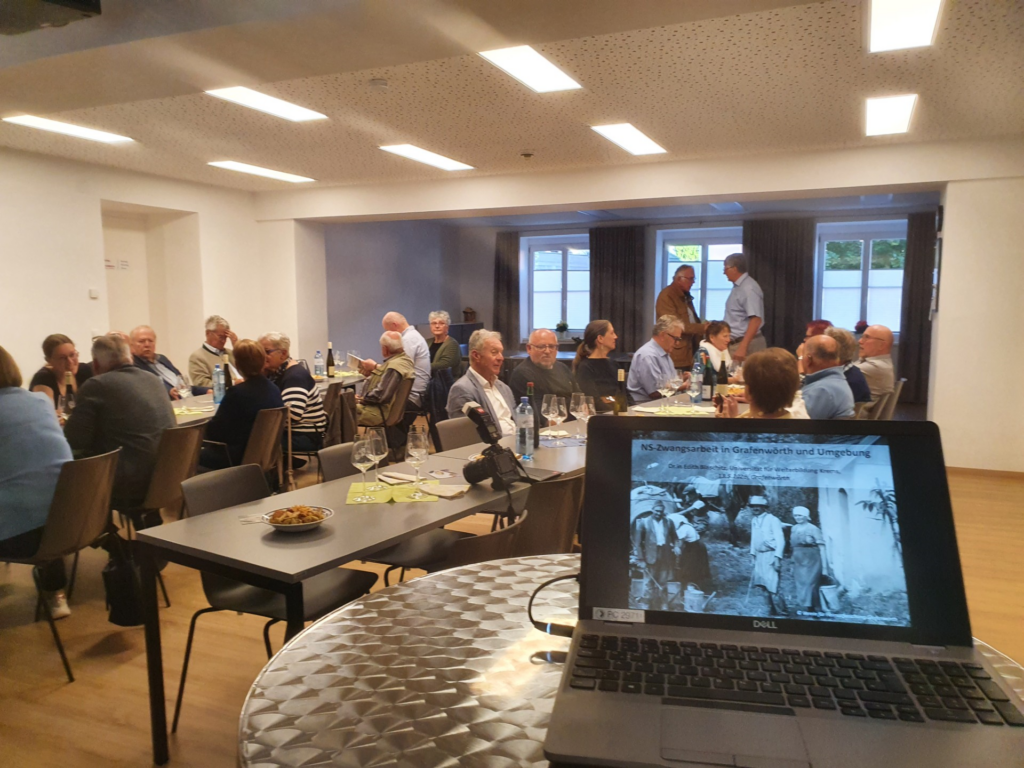
As a citizen science project, Connecting Memories collaborates with numerous local initiatives, associations, and motivated individuals. Today, we’d like to introduce one of them to you in more detail:
For two decades now, the Grafenwörth Local History Association, under the leadership of its chairman Friedrich Ploiner, has been making a significant contribution to the study and preservation of regional history. Originating from an initiative by the then-mayor, Alfred Riedl, the association has built up an extensive historical archive that today comprises thousands of photographs, documents, and memorabilia related to the history of the market town of Grafenwörth. The goal of the association’s work is to document local history and preserve it for future generations—“So that nothing is forgotten.”
The association’s research activities range from local and organizational history to the documentation of historic buildings and pilgrimage sites, as well as topics from the Nazi era.
The association’s archive also contains numerous photographs, lists, administrative files, and correspondence from 1940 to 1945 regarding prisoner-of-war camps and forced labor, documenting the deployment of French, Belgian, Italian, and other prisoners of war and civilian forced laborers in Grafenwörth, Seebarn, Jettsdorf, and St. Johann. The holdings include, among other things, lists of names, work and wage records, proof of accommodation, and photographs depicting the daily working lives of those affected.
Direct access to local sources from the Nazi era makes Friedrich Ploiner and the Grafenwörth Local History Association valuable partners for the citizen science project Connecting Memories. The available archival materials provide important starting points for researching regional forced labor, identifying work sites, and reconstructing the individual life stories of prisoners of war and forced laborers. In addition, the association has a broad network of eyewitnesses, family archives, and citizens interested in local history.
For Connecting Memories, the association thus serves as a central point of contact in the Grafenwörth area, combining scholarly research, volunteer engagement, and local remembrance culture—all in keeping with the project’s mission. This collaboration opens up the possibility of bringing previously unknown sources to light, supporting international research into descendants, and working together with the local community to sustainably come to terms with the history of prisoners of war and forced laborers.